
CIPINA / Our commitments
Food Security
Food security has always been a major challenge for many African governments, and even today several African countries suffer from food insecurity.
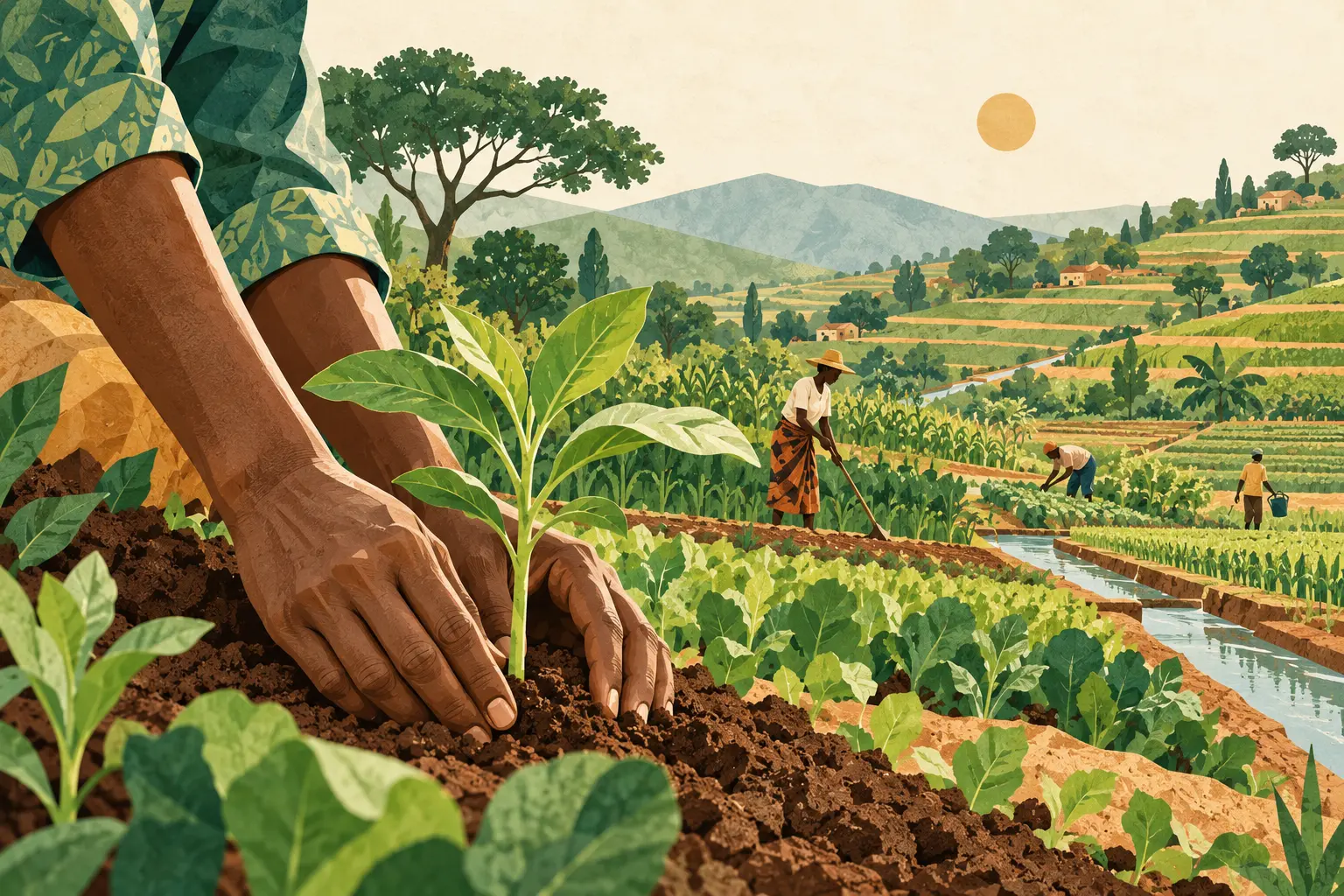
Food deficits, high food prices, drought, and the lack of efficient agricultural infrastructure have often been the cause of many tensions in various African countries, which have since been experiencing serious political instability. To combat these scourges, CIPINA, through its development cooperation projects, will attempt to provide Africa with enough quality food products to guarantee decent living conditions for families suffering from food insecurity through more profitable exports. However, this objective will only be achieved if significant advocacy is deployed in terms of agricultural practices. Sustainable development in Africa will not happen if African leaders do not make agriculture an absolute priority .
How to increase food production?
According to an FAO report, food production in Africa can be increased through:
- the increase in the surface area of cultivated land, although this means the cultivation of increasingly marginal lands and the loss of the environmental services provided by forests;
- recycling of manure, use of crop residues, use of green manures and cover crops; and adoption of agroforestry;
- the use of mineral fertilizers, although they are often too expensive for small farmers;
- changing cropping systems so that they become more productive and sustainable;
- increasing investments for land improvement and the promotion of coherent land tenure;
- to the efficient use of water.
CIPINA , through its agricultural projects, will intervene concretely on the ground in collaboration with its local partners, in order to promote coherent and sustainable agricultural development on the continent.